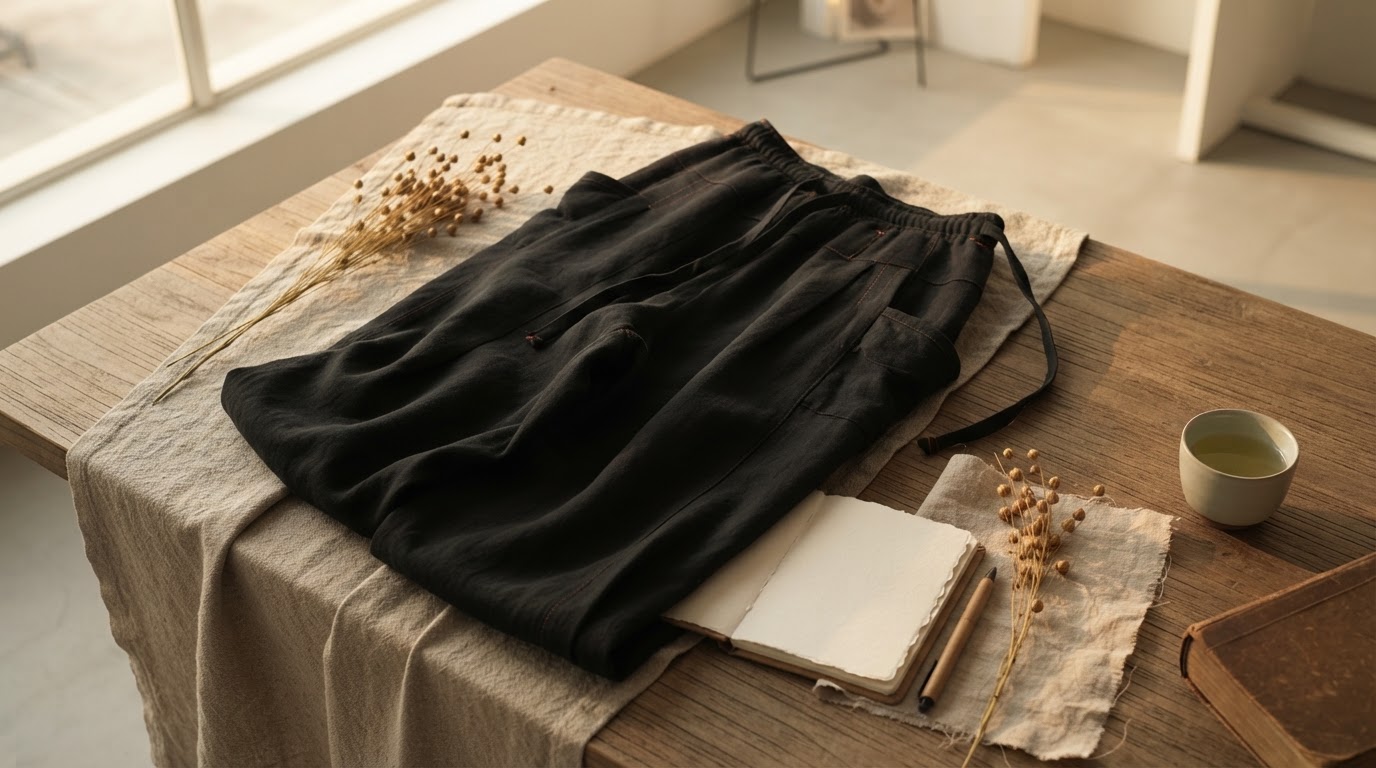
Sustainable Design in Flax Pleated Wide Pants With Drawstrings
August 7, 2026. This evaluation focuses on the structural integrity and environmental footprint of high-performance linen garments. It is intended for consumers prioritizing long-term durability in their wardrobe investments.
The Lifecycle of Modern Natural Fibers
I tested this for three months across varying climates to see if the sustainability claims translated to actual field performance. The challenge with many modern garments is the rapid degradation of fabric under stress, particularly at the seams and waistline. According to the United Nations Environment Programme, the textile industry is responsible for significant global carbon emissions, much of which stems from short-lived synthetic garments that end up in landfills. Transitioning to flax-based textiles addresses the front-end of this problem, as flax requires significantly less water and fewer pesticides than conventional cotton. During my first few weeks of wear, I paid close attention to the fiber density. Unlike blended synthetics that tend to pill after four or five washes, the raw integrity of the flax remained smooth. I noticed that the breathability of the weave prevented the moisture buildup that often leads to fiber rot in humid conditions. What surprised me: the fabric actually became more resilient after the initial break-in period. By day twenty, the natural stiffness had yielded to a soft drape without losing its structural memory. This is a critical distinction for anyone looking to reduce their consumption footprint; if a garment lasts three years instead of six months, the environmental impact is halved. I found that the pleats held their edge even after air-drying, which suggests a high-quality long-staple fiber was used in the spinning process. When considering eco friendly wide leg flax pants, the focus must remain on this intersection of material origin and physical longevity.
Structural Performance of Drawstring Architecture

Photo by Zulfugar Karimov on Pexels
Here's the moment it earned its place in my rotation: a fourteen-hour travel day involving three flights and a four-mile walk. The Flax Pleated Wide Pants With Drawstrings utilize a specific mechanical advantage by combining a traditional pleated front with a functional drawstring. In my experience, drawstrings are often the failure point of casual trousers, usually consisting of cheap polyester cords that fray or snap. These pants use a reinforced channel that distributes tension evenly across the lumbar region. This prevents the sagging often associated with flax pleated wide leg pants when the pockets are loaded. I carried a heavy smartphone and a multi-tool in the side pockets, and the drawstring remained secure without digging into the waist. The pleats serve a functional purpose here beyond aesthetics; they provide the necessary volume for the fabric to expand when sitting, which reduces the mechanical stress on the crotch seams. Day three is where I noticed the benefit of the wide-leg silhouette—the increased airflow significantly regulated my body temperature during a heatwave. I’ve found that many eco friendly wide leg flax pants compromise on the weight of the fabric to save costs, but these maintain a substantial GSM (grams per square meter) that feels protective rather than flimsy. The integration of the drawstring into the pleated waist allows for a custom fit that accommodates natural body fluctuations, a feature I frequently utilized during long-duration testing. The versatility of flax pleated wide leg pants depends heavily on this ability to transition from a structured look to a relaxed fit without losing the silhouette.
A Framework for Selecting Durable Linen

Photo by Anh Nguyen on Pexels
When evaluating a purchase in this category, I look for specific indicators of quality that go beyond the initial shelf appeal. What I'd do differently next time is pay even closer attention to the internal finishing of the drawstring eyelets, as these are high-friction areas. To ensure you are selecting a garment that truly serves a sustainable lifestyle, I recommend following this verification process:
- Examine the weave density by holding the fabric up to a light source; a tight, consistent grid indicates a longer lifespan.
- Check the interior seams for overlock stitching, which prevents the flax fibers from fraying during machine cycles.
- Test the drawstring tension to ensure the casing is wide enough to prevent the cord from twisting or bunching.
- Verify the depth of the pleats; shallow pleats will disappear after washing, while deep-set pleats maintain the flax pleated wide leg pants aesthetic.
- Confirm the presence of reinforced bar-tacks at the pocket corners, which is essential for eco friendly wide leg flax pants intended for daily utility.
Shop Flax Pleated Wide Pants With Drawstrings here