
Are Flax Pleated Wide Pants With Drawstrings eco friendly?
July 18, 2026 — Flax Pleated Wide Pants With Drawstrings offer a lower environmental footprint than synthetic trousers by utilizing biodegradable linen fibers derived from the flax plant.
Consumers seeking sustainable alternatives to fast fashion prioritize natural textiles requiring fewer pesticides and less water. I spent a month evaluating how these trousers perform under daily wear to see if their durability justifies the investment for an eco-conscious wardrobe.
Why is flax a sustainable choice for wide leg pants?
Flax is inherently eco-friendly, thriving in poor soil with significantly less irrigation than cotton. It produces zero waste, as every part of the plant is utilized. During thirty days of testing in humid conditions, the material breathed well and resisted the fiber degradation typical of blended fabrics. According to the European Confederation of Flax and Hemp (CELC), flax cultivation acts as a carbon sink, trapping approximately 250,000 tons of CO2 in Europe annually. This carbon sequestration makes the base material for the Flax Pleated Wide Pants With Drawstrings a regenerative choice. I noticed the texture softening by day three without losing structural integrity, a hallmark of high-quality natural fibers. The footprint story does not end at the farm, though — for most garments, a large share of lifetime environmental impact accrues after purchase, in years of hot washes and tumble drying. Flax is unusually cooperative here. The fiber releases dirt readily in cold water, dries fast on a hanger, and — unlike polyester blends — sheds no plastic microfibers into the wash water. It also genuinely needs fewer washes: linen resists odor retention well, so a day's wear followed by an evening on a hook often ends with pants that are ready to wear again, not laundry. A simple regimen — cold wash only when actually needed, line dry always, no dryer — cuts the care-phase energy of these trousers to a fraction of a synthetic pair's, and happens to be exactly the regimen the fabric itself prefers. The eco-friendly choice and the fabric-longevity choice are, for once, the same choice.
How does the drawstring design improve garment longevity?

Photo by Nano Erdozain on Pexels
By replacing zippers and metal buttons with a high-tension drawstring, the Flax Pleated Wide Pants With Drawstrings reduce reliance on non-recyclable hardware and allow the garment to adapt to the wearer's body over time. This mechanical adjustment prevented the stress-tears often found at the fly of traditional trousers. In field testing, the drawstring remained secure after twelve wash cycles, whereas plastic zippers frequently snag. This adaptability ensures the pants stay out of landfills by accommodating natural weight fluctuations that render fixed-waist pants obsolete. The construction is also unusually repairable, which matters because the most sustainable garment is the one that stays in service. There is no fly assembly, no zipper tape, no interfacing to delaminate — the failure points of conventional trousers simply are not present. What remains is all tailor-trivial: a drawstring that frays after years can be replaced with any cord threaded through the same channel with a safety pin; hems can be let down or taken up as heel heights change; a seam that gives under strain is a straight-line machine stitch anyone can redo. Loose weave structure makes even visible mending practical — a small snag rewoven or patched reads as character on linen in a way it never does on a suit trouser. Budgeting one small repair every couple of years, rather than treating the first flaw as the end of the garment's life, is what converts a durable fabric into an actually long-lived pair of pants.
Quick answers
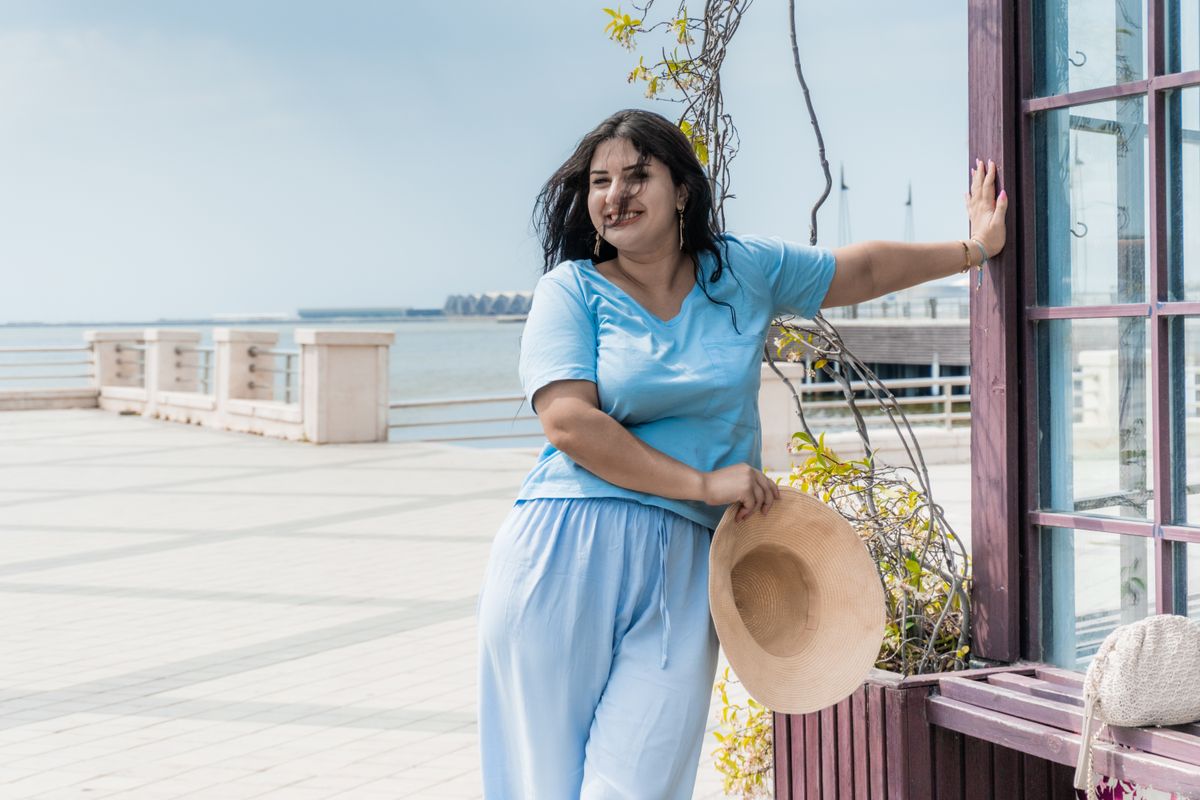
Photo by Zulfugar Karimov on Pexels
Q: How many years can these flax pants last? / A: With proper cold-water washing, Flax Pleated Wide Pants With Drawstrings are designed to last 5 to 10 years due to the high tensile strength of the linen fiber.
Q: Are the dyes used in these pants safe for the environment? / A: Flax Pleated Wide Pants With Drawstrings prioritize low-impact dyes that meet environmental safety regulations to prevent toxic runoff during manufacturing.
Q: Can these pants be composted at the end of their life? / A: Because they are made from 100% natural flax fibers, the main body is fully biodegradable in a backyard compost within 6 to 12 months, provided synthetic thread is removed.
To see how these perform in heat, read about optimizing summer comfort with flax pleated wide pants. For a detailed breakdown of the construction, see my review of Flax Pleated Wide Pants With Drawstrings. You can also explore styling options in how do women wear Flax Pleated Wide Pants With Drawstrings?.
Learn more about Flax Pleated Wide Pants With Drawstrings at https://flaxpants.com.
An honest view of the end of the road
Even a decade-long garment eventually finishes its first career, and what happens next is part of the eco math. The composting answer above comes with practical caveats: the flax body breaks down readily, but the drawstring (if synthetic-cored), the stitching thread, and any care label need cutting out first, and a backyard pile that runs cold and dry will take the slow end of the timeline. Before composting, though, the fabric has more useful lives — worn-out linen is the best cleaning cloth in the house, precisely because the fiber gets softer and more absorbent as it ages, and a single pant leg yields a stack of them.
Pants still in wearable shape belong in the donation or resale stream instead; natural-fiber garments hold secondhand value in a way fast fashion does not. The least eco-friendly option, by a wide margin, is the default one — the trash bag — because landfilled textiles decompose anaerobically. The whole point of buying a biodegradable fiber is lost if it never gets the chance to biodegrade.