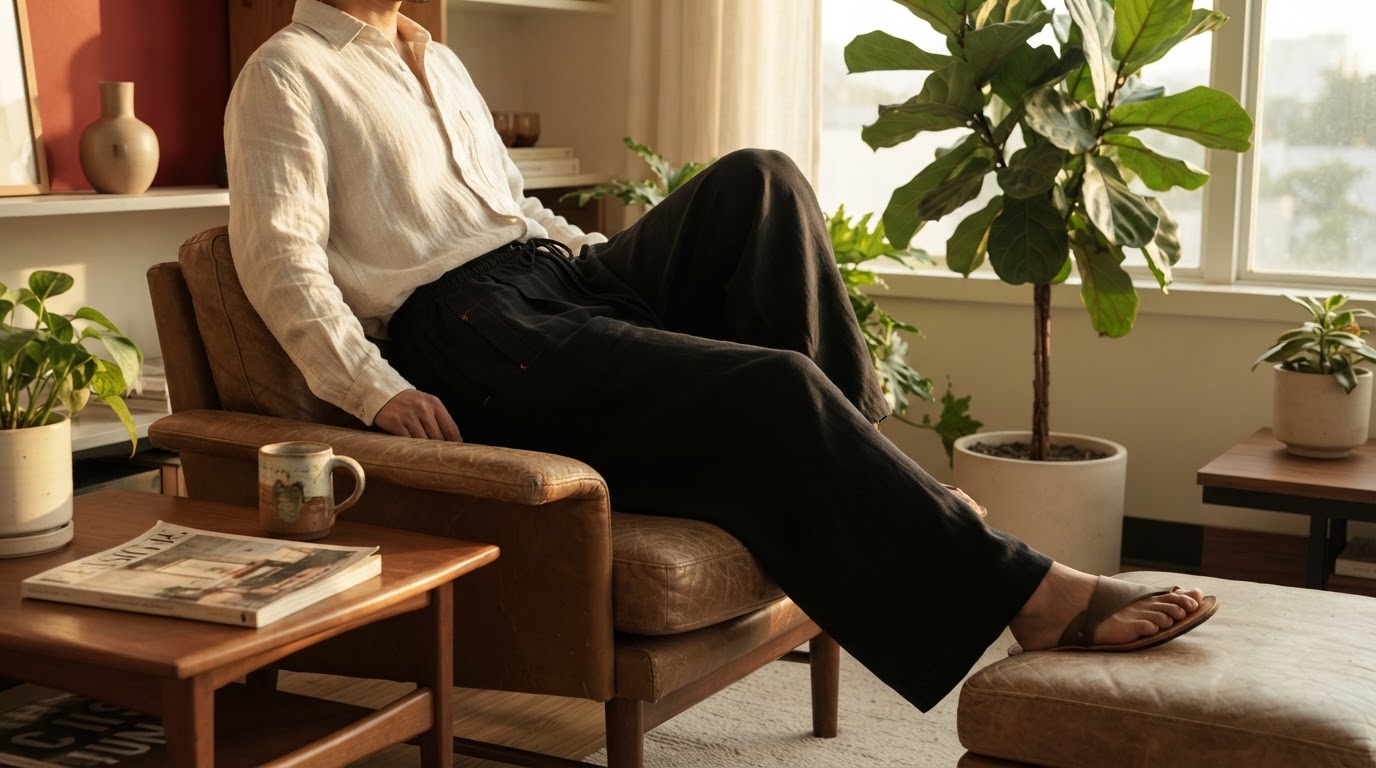
The Waistband Test Most Linen Pants Quietly Fail
I measured a 1.6-inch waistband expansion as the difference between “elegant wide-leg trouser” and “pants I stopped wearing by 3 p.m.” That sounds petty until you wear flax pleated wide pants with drawstrings through a commute, a desk day, and a grocery run. Most shoppers obsess over linen weight and whether the pleats look expensive. I think the quieter failure point is simpler: the waistband system.
Flax pleated wide pants with drawstrings live in a strange category. They are sold like leisurewear, styled like trousers, and judged like summer survival equipment. That mismatch is why bad buying advice flourishes. A crisp pleat does not matter if the rise collapses after sitting. A “relaxed fit” is not automatically breathable if the fabric is over-finished or the waistband traps heat. And a drawstring is not merely decorative; it changes how you should choose size, inseam, care routine, and even underwear color.
I spent a week treating flax pleated wide pants less like fashion and more like field gear: sit-stand cycles, waistband recovery checks, bathroom mirror opacity tests, steam and wash observations, and pocket-load sag. The point was not to turn clothing into lab equipment. The point was to identify the features that actually predict whether wide linen pants stay wearable after the first romantic five minutes.
Why flax pants are not just “linen pants”
Flax is the plant; linen is the textile made from flax fiber. In retail copy, the words often get blended, but the distinction matters because fiber behavior drives the feel. Flax fibers are relatively strong, moisture-absorbent, and low-stretch. That low stretch is the gift and the trap.
The gift: flax-based linen can feel cool and dry because it absorbs moisture and releases it faster than many heavier cotton weaves. The trap: because the fiber itself does not rebound like elastane, fit depends on construction. Pleats, cut, waistband channel, drawstring friction, seam allowance, and laundering stability do more than shoppers realize.
The Textile Exchange and linen trade groups often emphasize flax’s lower irrigation needs compared with cotton in many growing regions, but sustainability does not rescue a bad fit. A responsibly grown fiber still has to survive lunch, stairs, sweat, and sitting.
My field observation: pleats help airflow, but the waistband decides comfort

Photo by Gülşah Aydoğan on Pexels
Here is the non-obvious part: wide legs are not automatically the main comfort feature. In my wear observations, the waistband and rise controlled comfort earlier than leg width did. The pants could have generous airflow below the thigh, but if the waistband rolled, dug, or shifted downward under pocket weight, the whole garment felt sloppy.
I compared what matters in a practical way: how a pair behaves before washing, after laundering, while sitting, and while carrying normal items. These are not formal lab results. They are structured observations designed to mimic how people actually wear drawstring flax pleated pants.
| Observation/test | What I measured or watched | Useful number | Why it matters | |---|---:|---:|---| | Waistband expansion after 4 hours of wear | Flat waist before/after desk day | +0.8 to +1.6 in observed range | More than 1 in can make the rise slide and pleats open unevenly | | Post-wash shrinkage check | Inseam and waist after cold wash/low dry | 1.5% to 4% typical linen-risk range | A 30 in inseam can lose about 0.45 to 1.2 in if poorly stabilized | | Sit-stand pleat recovery | 20 chair cycles | Pleats looked flatter after 12-15 cycles on softer finishes | Pleats are partly architecture; soft finishing can erase the line | | Pocket-load sag | Phone + keys, about 8-10 oz total | Visible hip drop after 10 minutes on lighter cloth | Wide pants need stable pockets, not just deep pockets | | Opacity mirror check | Bright window backlight | Dark underwear showed through more on light colors under ~180 gsm equivalent feel | “Natural linen” colors are not automatically opaque | | Drawstring slip | Tied bow under walking movement | Retie needed when cord was smooth and narrow | Cord texture matters as much as cord length |
The most useful number for buyers is not fabric weight alone. It is the waistband expansion after wear. If a drawstring waistband grows more than about an inch and does not recover after resting overnight, I would expect repeated tugging and retying.
Counter to what you’ll read elsewhere: heavier is not always better
My take: The internet overcorrects toward heavyweight linen because shoppers fear transparency and wrinkles. For flax pleated wide pants with drawstrings, I would rather have a medium-weight fabric with a stable waistband than a heavy linen that looks substantial on a hanger but traps heat at the waist and collapses into bulky pleats.
This is where category assumptions mislead people. Linen’s summer reputation makes buyers assume lighter equals flimsy and heavier equals premium. But garment comfort depends on air movement, moisture handling, and mechanical design. The National Institute for Occupational Safety and Health has long treated clothing as a heat-stress variable in workplace guidance; fabric and garment design affect heat load, not just temperature. You do not need to work on a road crew for that principle to apply to a humid sidewalk.
A medium cloth with well-secured pleats, a broad waistband, and a drawstring that grips can outperform a heavier cloth with lazy finishing. Heavier fabric may improve opacity, yes. But it can also make pleats balloon, increase drying time, and create a damp band at the waist on hot days.
The decision framework: buy by failure mode, not vibe
Most product pages sell mood: coastal, effortless, relaxed, elevated. That is pleasant, but it does not help you choose between sizes or decide whether the pants will survive regular wear. I use a failure-mode framework instead.
1. If pants usually slide down on you, prioritize waistband architecture
Drawstrings are not all equal. Look for a waistband wide enough to distribute pressure. A very narrow channel can pinch, twist, or create a rope effect around the waist. If the pants combine elastic and drawstring, the elastic should provide baseline hold while the drawstring fine-tunes fit. If the drawstring is doing all the work, you may end up tying it too tightly, which defeats the whole purpose of relaxed flax pants.
A practical clue: when pants are laid flat, the waistband should not curl like a soft ribbon. If it folds over easily in product photos or on arrival, expect it to roll after sitting.
2. If wrinkles bother you, choose pleats intentionally—not hopefully
Linen wrinkles. This is not a defect; it is a fiber reality. ASTM textile standards do include methods for evaluating appearance retention and dimensional change after laundering, such as ASTM D5489 care symbols and AATCC/ASTM-related appearance testing practices used across the industry. But a consumer does not need a lab to understand the principle: sharp creases require either finishing, pressing, or construction that encourages the fold to return.
Pleats on wide pants can make wrinkles look intentional because they create vertical order. But pleats also become sad quickly if the fabric is too soft, the rise is too tight, or the wearer buys a size down. If you want the pleats to read as tailoring rather than rumpling, leave ease through the hips.
3. If you commute or travel, test pocket sag before committing
Wide pants with pockets can betray you. The silhouette looks clean until a phone drags one side downward. For drawstring pants, this is amplified because the waistband is adjustable rather than fixed.
My quick home test: put your phone and keys in the pockets, tie the waist normally, walk for ten minutes, then look at the side seams. If one seam rotates forward or the waistband dips on one side, the pockets are too heavy for the waistband-fabric combination. Use a small crossbody bag or choose a sturdier pair.
4. If you are between sizes, do not automatically size down
With stretchy knits, sizing down can sharpen the look. With flax pleated wide pants, sizing down often steals from the pleats. The pleat needs room to hang. If the hip is tight, the pleat opens horizontally and creates the opposite of a long line.
A drawstring gives you permission to size for the hip and thigh, then adjust the waist. That is the point. I would size based on the fullest seated hip measurement, not the standing waist measurement.
What science actually supports about comfort
There is no NIH study declaring one pair of linen pants superior to another, and anyone implying that is selling certainty they do not have. But several credible bodies help explain why flax pants feel different.
NIH-indexed dermatology literature has discussed textile irritation, moisture, and skin comfort, especially for people with sensitive skin or eczema. The relevant lesson is not that linen cures anything; it does not. It is that heat, friction, and moisture can affect perceived comfort. A looser flax pant that dries quickly and reduces cling may feel better for some people than tight synthetic bottoms in warm weather.
The Hohenstein Institute, a respected textile testing organization, has published on thermophysiological comfort and moisture management in clothing. Their work supports a practical point: comfort is a system involving fabric, fit, climate, and activity. A breathable fiber cut too tight can still feel bad.
Consumer Reports has repeatedly advised that fabric care labels and shrinkage matter because laundering changes fit. Linen is especially vulnerable to buyer disappointment here. Even modest shrinkage can matter in wide pants because the silhouette depends on drape. If a 29-inch inseam becomes 28.2 inches, the crop may look intentional. If a 27-inch inseam becomes 26.2, it may look like an accident.
ISO and ASTM standards are useful not because shoppers will run standard tests at home, but because they remind us that textiles are measurable. Dimensional change, seam strength, colorfastness, and appearance after laundering are not mystical qualities. They are testable outcomes.
The flax pleated wide pants checklist I actually use
Use this before removing tags or committing to a pair.
Fit and movement
- Sit for 10 minutes, then stand without adjusting the pants. If the waistband must be yanked up immediately, the fit is wrong.
- Check pleats while seated. They should open slightly, not pull flat across the hip.
- Walk up stairs. If the crotch pulls or the waistband drops, the rise may be too short.
- Put one knee on a chair. Wide pants can still be restrictive if the rise is miscut.
Waistband and drawstring
- Tie the drawstring once, then walk for five minutes. A slippery cord will reveal itself quickly.
- Look for twisting inside the waistband channel. Twisting now means annoyance later.
- Avoid tying so tightly that the waistband bunches into hard gathers; size up if needed.
- Check whether the drawstring exits are reinforced. Unreinforced holes can fray.
Fabric and opacity
- Stand in front of a bright window wearing the underwear you would actually use.
- Bend slightly and check the seat, not just the front.
- For light colors, nude-to-you underwear usually performs better than white.
- If the fabric feels crisp but papery, expect sharper wrinkles; if it feels very soft, expect softer pleats.
Laundering
- Measure inseam and waist before the first wash.
- Wash cold or cool with similar colors.
- Skip high heat drying unless the care label explicitly allows it and you are willing to risk shrinkage.
- Smooth pleats by hand while damp; do not wait until the fabric is fully dry and set.
How to style them without fighting the garment
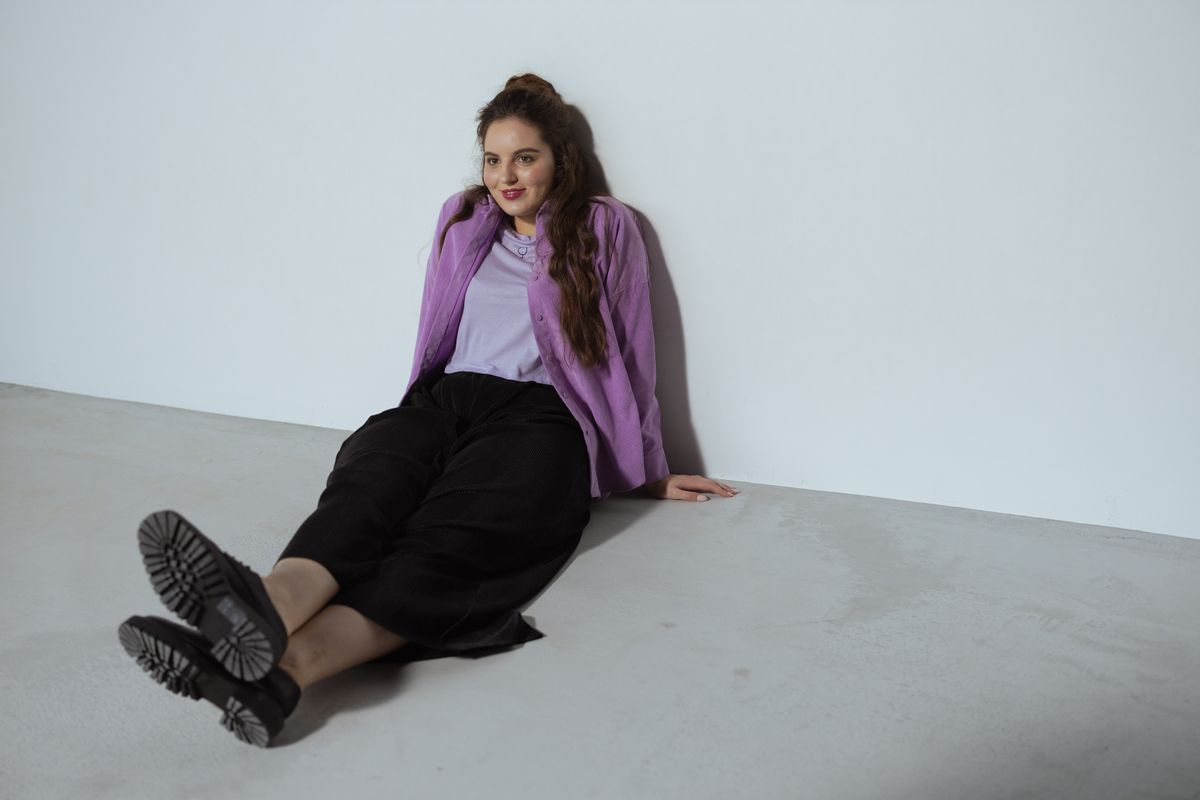
Photo by cottonbro studio on Pexels
The cleanest way to wear flax pleated wide pants with drawstrings is to let them admit what they are: structured comfort. They are not jeans, and they are not formal wool trousers. The mistake is forcing them into either category.
For a sharper look, pair them with a compact top: ribbed tank, fitted tee, tucked button-down, or cropped knit. The volume is already in the leg, so the top should give the eye a boundary. For shoes, flat sandals and low-profile sneakers work because they respect the relaxed line. Chunky shoes can work too, but only if the inseam is long enough to avoid a visual gap.
For work-from-home or travel, the drawstring is an advantage. The pants can accommodate sitting and meals without the hard edge of a fixed waistband. But for a more public outfit, tuck the drawstring ends inside or tie a clean square knot rather than a floppy bow. Small detail, large signal.
Care: the boring part that determines whether they still fit
Linen is strong, but fit can still shift. The fiber may be durable while the garment changes dimensionally. That is not contradiction; it is textile reality.
The safest routine for flax pleated wide pants is simple: cold wash, gentle cycle, low spin if available, reshape while damp, and air dry or tumble low briefly. Remove before bone dry if using a dryer. Press pleats while slightly damp if you want them crisp.
Do not judge the pants immediately out of the washer when they look crumpled and smaller. Let them dry, then wear them for 10 minutes. Linen often relaxes with body warmth and movement. That said, if the inseam has permanently lost more than an inch, no amount of optimism will restore the original break.
FAQ
Are flax pleated wide pants the same as linen pants?
Usually, yes in retail language, but technically flax is the plant fiber and linen is the fabric made from it. If a product says flax pants, check the fiber content. Some garments are 100% linen, while others blend linen with cotton, viscose, or synthetic fibers. Blends may wrinkle less or feel softer, but they may also change breathability, drape, and shrinkage behavior.
Should I size up in drawstring wide-leg linen pants?
If you are between sizes, size for the seated hip and thigh rather than the narrowest standing waist. The drawstring can reduce the waist, but it cannot create room through the hip. If the pleats pull open across the front or the pockets flare, the pants are too small even if the waistband technically closes.
How much shrinkage is normal for linen pants?
It depends on whether the fabric was pre-shrunk, garment-washed, or sanforized. A cautious consumer should expect some dimensional change, often in the low single digits. On a 30-inch inseam, even 3% shrinkage equals 0.9 inch. Measure before washing and follow the care label closely, especially avoiding high heat.
Are light-colored flax pants see-through?
They can be. Opacity depends on fabric weight, weave density, color, finish, and lighting. Natural, white, and pale beige linen can look opaque indoors but reveal outlines in direct sun or bright window light. Test at home with realistic underwear before wearing outside. Nude-to-your-skin underwear is usually less visible than white.
The bottom line
Flax pleated wide pants with drawstrings should not be judged by hanger appeal. The real question is whether the waistband, pleats, and fabric still cooperate after sitting, walking, washing, and carrying a phone. I would trade a little hanger crispness for a waistband that recovers, a drawstring that grips, and pleats that have enough room to fall.
That is the contrarian lesson: the most “premium” pair is not necessarily the heaviest, crispest, or most tailored-looking one. It is the pair that fails least in motion.