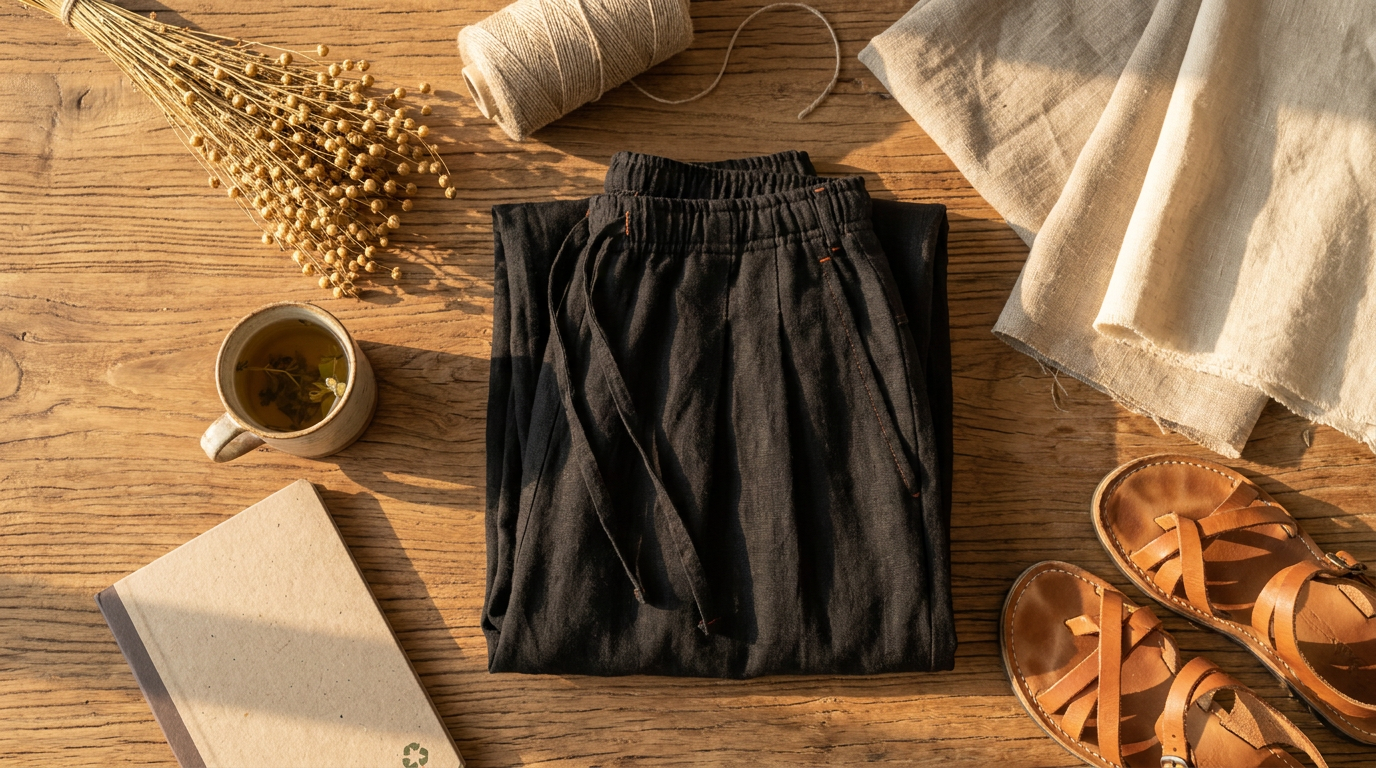
Sustainable Design of Flax Pleated Wide Pants With Drawstrings
July 21, 2026. This analysis explores the intersection of sustainable textile engineering and ergonomic garment design. It is intended for consumers seeking to reconcile high-fashion silhouettes with ethical manufacturing standards. When evaluating modern apparel, two axes matter here: the ecological footprint of the raw material and the functional longevity of the garment's silhouette.
The Environmental Impact of Conventional Bottoms
Traditional garment manufacturing often prioritizes low-cost synthetic fibers that contribute significantly to microplastic pollution. The fashion industry faces a systemic challenge in moving away from petroleum-based textiles toward regenerative options. According to the United Nations Environment Programme, the global fashion sector is responsible for a substantial percentage of global carbon emissions, much of which stems from the production phase of synthetic materials. This creates a distinct problem for the conscious consumer: how to find garments that offer professional structure without the environmental toll of polyester blends. The rise of linen wide leg pants with drawstring variants highlights a shift toward plant-based fibers, yet many options on the market lack the architectural integrity required for formal settings. Think of it as a matrix of durability versus decomposability. While synthetic fibers offer stretch, they fail the end-of-life test. Conversely, many natural fibers lack the tension required to hold a sharp pleat. This tension between form and fiber defines the current landscape of sustainable trousers. The search for linen drawstring wide leg trousers often leads to silhouettes that are overly casual, failing to serve the needs of a professional wardrobe. Consumers are increasingly asking for garments that bridge the gap between loungewear comfort and corporate aesthetic standards, necessitating a rethink of how natural fibers are woven and tailored to maintain shape over years of wear.
Engineering the Flax Pleated Wide Pants With Drawstrings
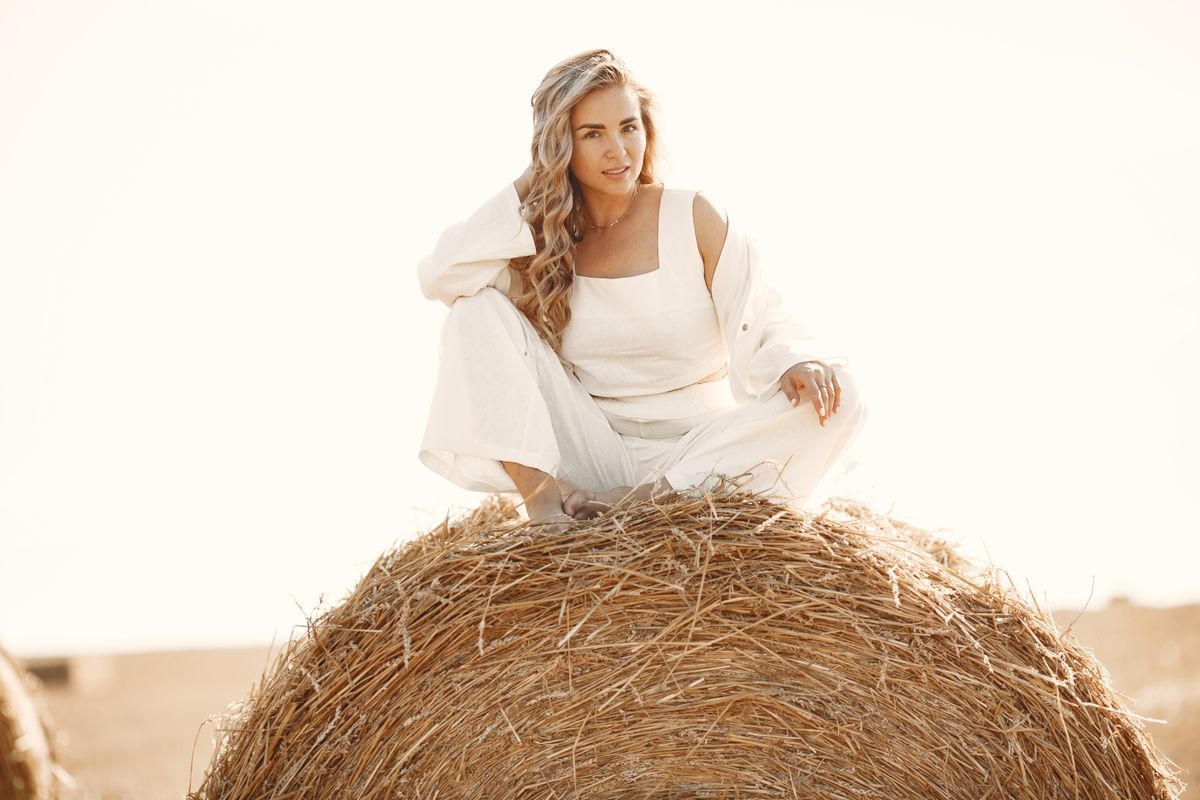
Photo by Gustavo Fring on Pexels
Flax Pleated Wide Pants With Drawstrings address the structural limitations of standard linen by utilizing high-density flax fibers coupled with precise pleat placement. The design leverages the inherent stiffness of flax to create a lasting vertical line, effectively mimicking the drape of heavier wools while maintaining the breathability of a cellulose-based textile. Unlike standard boho linen palazzo pants drawstring models that prioritize volume over structure, these pants utilize a reinforced waistband and deep-set pleats to ensure the wide-leg opening retains its geometric shape. The integration of a drawstring within a pleated framework is a specific engineering choice that allows for anatomical variance; it accommodates fluctuating waist measurements without distorting the visual alignment of the pleats. This is a critical distinction from traditional pleated linen trousers with drawstring which often suffer from pleat-splaying when the drawstring is tightened. By anchoring the pleats below the drawstring channel, the garment maintains a flat front regardless of how tight the waist is secured. This design choice ensures that the linen drawstring wide leg trousers aesthetic remains sharp and intentional. Once you see it this way, the drawstring is no longer just a comfort feature—it is a tool for personalized tailoring that extends the wearable life of the garment across different body phases. The use of flax also ensures that the garment remains fully biodegradable at the end of its lifecycle, satisfying the requirement for a circular fashion economy while providing the user with a high-performance, low-maintenance wardrobe staple.
Framework for Selecting Sustainable Trousers
Photo by Alexander Camargo on Pexels
Identifying a high-quality sustainable trouser requires a multi-dimensional assessment of construction and material sourcing. The decision rule: a garment is only as sustainable as its utility. If a pair of pleated linen trousers with drawstring loses its shape after three washes, its ecological footprint per wear becomes unacceptably high. To evaluate your next acquisition, use the following structural and material checklist:
- Fiber Density: Ensure the linen weight is sufficient to support architectural features like pleats without excessive wrinkling.
- Pleat Anchoring: Verify that pleats are stitched down at the waistband to prevent splaying and ensure a consistent drape.
- Hardware Integrity: Look for drawstrings made from natural fibers rather than synthetic cords to ensure total garment compostability.
- Seam Reinforcement: Check for French seams or bound edges, which prevent the fraying common in lower-quality flax garments.
- Dye Safety: Confirm the use of low-impact or Oeko-Tex certified dyes to minimize chemical runoff during the manufacturing process.
Shop Flax Pleated Wide Pants With Drawstrings here