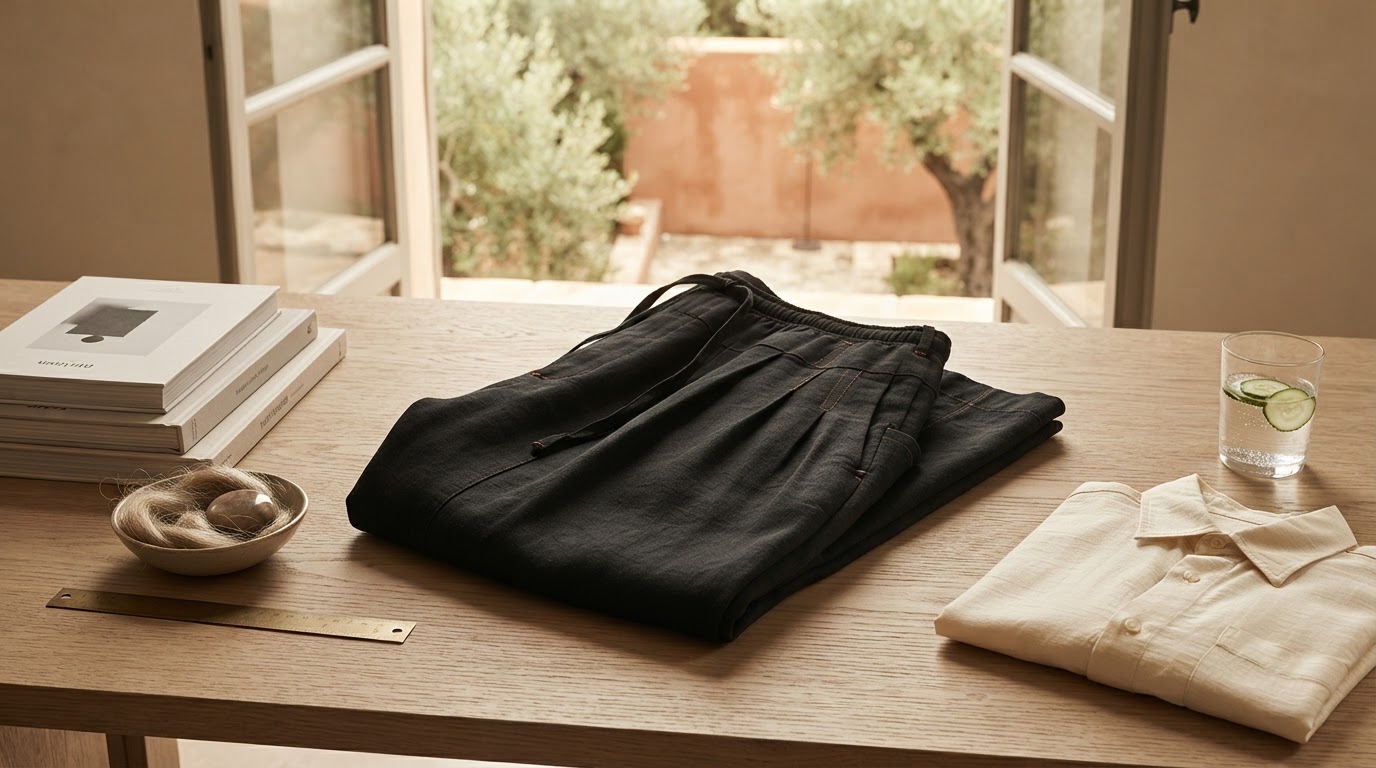
Optimizing Airflow with Flax Pleated Wide Pants With Drawstrings
August 1, 2026. This technical analysis explores the thermal regulation properties of linen-based textiles and high-volume silhouettes. It is written for professionals seeking to maintain a polished appearance while navigating high-temperature environments.
Selecting attire for extreme heat requires a shift from aesthetic-first thinking to a functional framework. Think of it as a matrix of moisture management and air circulation. Two axes matter here: the physical weight of the textile and the structural volume of the garment. When these two factors align, the wearer benefits from passive cooling. High-density fabrics like standard cotton or polyester blends often trap heat against the skin, leading to thermal discomfort. Conversely, the use of flax fibers creates a natural ventilation system due to the inherent stiffness and weave density of the material. By utilizing Flax Pleated Wide Pants With Drawstrings, individuals can leverage a garment designed specifically to facilitate this exchange of air. Once you see it this way, the choice between a slim-fit synthetic and a wide-leg natural fiber becomes a matter of physiological efficiency rather than just style.
The Thermal Challenge of Summer Textiles
High humidity and rising temperatures create a microclimate between the skin and clothing that can quickly become saturated with moisture. The primary issue with modern synthetic fibers is their lack of breathability; they often act as a vapor barrier, preventing the natural evaporation of sweat. According to the textile science principles maintained by the International Textile and Apparel Association, the ability of a fabric to allow moisture vapor to pass through—known as water vapor transmission—is critical for maintaining human core temperature. When fabric clings to the body, it reduces the surface area available for cooling. This is why standard trousers often fail in professional summer settings.
Beyond simple fabric composition, the architecture of the garment plays a significant role in heat dissipation. Traditional narrow-leg trousers provide little space for air to move vertically. This stagnation leads to localized heat buildup. The shift toward flax pleated wide leg pants represents a functional solution to this problem, as the wider circumference at the hem acts as a chimney, drawing cooler air upward as the body moves. This effect is amplified by the choice of material. Flax is one of the oldest known fibers, prized for its durability and its ability to absorb up to 20% of its weight in moisture without feeling damp. For those specifically seeking pleated flax trousers women styles, the integration of pleats adds structural depth that keeps the fabric away from the skin, further enhancing the cooling effect through air gaps. The decision rule is simple: prioritize materials that facilitate evaporation and silhouettes that prevent skin-to-fabric contact.
Engineering Comfort with Flax Pleated Wide Pants With Drawstrings

Photo by Gustavo Fring on Pexels
Flax Pleated Wide Pants With Drawstrings address these thermal challenges through a specific combination of material science and ergonomic design. The linen-rich composition provides the necessary rigidity to maintain the wide-leg shape, ensuring the "chimney effect" remains active even during periods of low activity. Unlike softer rayons or thin cottons that might collapse against the leg, flax maintains its structure, creating a permanent buffer zone of air. The inclusion of drawstrings is not merely a stylistic choice; it allows for micro-adjustments in fit. As the body fluctuates in temperature throughout the day, the ability to loosen or tighten the waistband ensures that blood flow remains unrestricted and the garment sits at the optimal height for airflow.
When evaluating flax pleated wide leg pants, the pleating is the most critical structural element. Pleats function as expandable reservoirs of fabric. When seated, the pleats open slightly to prevent the fabric from pulling tight across the thighs, which is a common failure point for comfort in summer trousers. This design detail ensures that even in sedentary professional environments, the cooling benefits of the wide-leg cut are preserved. Furthermore, the aesthetic versatility of pleated flax trousers women allows for a transition from formal meetings to casual outdoor settings without requiring a change in attire. By integrating the drawstring functionality, the garment bridges the gap between the structured look of a traditional trouser and the comfort of lounge wear. This hybrid approach is essential for a modern wardrobe that demands both performance and presentation. The synergy between the wide leg, the pleated front, and the flax fiber creates a garment that actively works to lower the wearer's perceived temperature.
A Framework for Selecting Summer Trousers

Photo by Alexander Camargo on Pexels
When building a summer wardrobe, the goal is to minimize thermal resistance while maximizing durability. The decision rule: if the fabric cannot stand away from the body independently, it will likely trap heat. To ensure a garment meets the requirements for high-temperature performance, use the following checklist for evaluation:
- Fiber Content: Verify the presence of flax or linen, as these fibers offer superior heat conductivity compared to silk or wool.
- Structural Volume: Ensure the leg width allows for at least two inches of clearance between the skin and the fabric at the mid-thigh.
- Adjustability: Look for integrated drawstrings or elasticated sections that accommodate physical changes throughout the day.
- Pleat Depth: Check that pleats are deep enough to provide extra room when sitting, preventing the fabric from clinging.
- Hem Width: A wider hem facilitates better air intake from the bottom of the garment up toward the torso.
Shop Flax Pleated Wide Pants With Drawstrings here.