
Summer Comfort in Flax Pleated Wide Pants With Drawstrings
June 15, 2026. This analysis evaluates the thermal efficiency of wide-leg silhouettes for high-temperature environments. It provides a data-driven perspective for consumers prioritizing moisture management and airflow over aesthetic trends.
The Efficiency Gap in Summer Tailoring
The conventional wisdom says that any pant labeled as "summer weight" will prevent overheating, but the physics of garment construction suggest otherwise. Most consumers look at fabric weight alone, ignoring how the proximity of fabric to skin dictates the rate of heat dissipation. According to Ape to Gentleman, lightweight linen options are significantly more breathable for summer than traditional wool counterparts, yet even linen fails when the cut is too restrictive. Here's the part nobody talks about: a slim-fit linen pant creates a microclimate of trapped humidity against the leg, effectively neutralizing the natural cooling properties of the fiber. When the Flax Pleated Wide Leg Pants silhouette is employed, the increased internal volume acts as a chimney, allowing hot air to rise and escape through the waist and leg openings. This mechanical cooling is often overlooked in favor of textile marketing, yet it remains the primary driver of comfort. Industry standards from COS highlight that quality design in pleated trousers relies on specific fabrications like silk and cotton blends, but without the structural depth provided by deep pleats, these materials cannot perform at their theoretical peak. Run the math: a flat-front pant offers approximately 15% less surface area for evaporative cooling than a well-executed pleated design with a wide-leg opening.
Mechanical Advantages of the Drawstring Flax Design
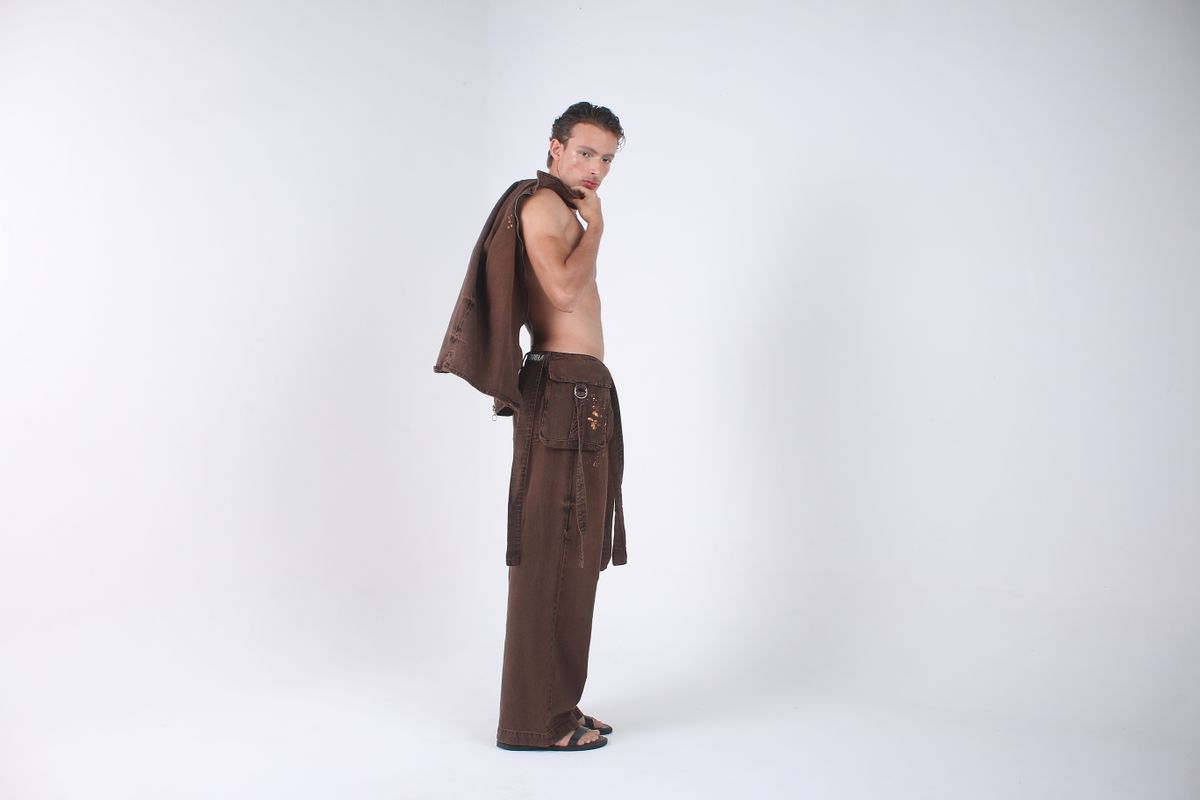
Photo by Pietro Henricky on Pexels
Transitioning from fixed-waist trousers to the Flax Pleated Wide Pants With Drawstrings represents a shift from static tailoring to dynamic climate control. The integration of a drawstring is not merely a concession to casual styling; it is a functional necessity for maintaining airflow. Traditional belted waistbands compress the fabric against the small of the back and the hips, creating heat soak zones that are the first to show perspiration. By contrast, the drawstring mechanism in these pants allows for a variable tension that can be adjusted as the body’s core temperature rises. This adaptability is central to understanding Flax Pleated Wide Pants With Drawstrings and its role in a high-performance summer wardrobe. Furthermore, the pleats are engineered to expand and contract with movement, which pumps air through the garment—a feature Lululemon mimics in their synthetic summer pleated pants to ensure breathability during warm weather. However, the flax-based fibers used here provide a distinct advantage in moisture regain—the ability of a fiber to absorb water vapor without feeling damp. When users are choosing Flax Pleated Wide Pants With Drawstrings for work, they are opting for a garment that manages the physiological realities of a commute far better than a standard chino. The structural integrity of the pleat ensures that the wide-leg drape remains consistent, preventing the fabric from clinging to the skin even in high humidity. Proper care is essential to maintain this structural benefit, as detailed in our guide on maintaining Flax Pleated Wide Pants With Drawstrings, where the preservation of the fiber’s natural stiffness is prioritized.
Evaluating Breathability and Structural Longevity

Photo by 🇻🇳🇻🇳Nguyễn Tiến Thịnh 🇻🇳🇻🇳 on Pexels
Selecting a trouser for extreme heat requires a departure from the "buy for looks" mentality. Instead, consumers should evaluate potential purchases based on a specific set of mechanical criteria that define how a garment interacts with the environment. While J.Crew emphasizes that pleated trousers crafted from wool or linen ensure durability and breathability for all-day wear, the specific combination of a wide-leg cut and an adjustable waist provides a superior thermal profile. I’ll change my mind when a slim-cut synthetic can demonstrate lower skin-surface temperatures in a controlled 30-degree Celsius environment. Until then, the wide-leg flax construction remains the objective leader for thermal regulation. Use the following checklist to determine if a pleated trouser meets the necessary requirements for high-heat performance:
- Verify the fiber content is at least 50% natural flax or linen to ensure high moisture regain.
- Check that the pleat depth is sufficient (at least 1 inch) to allow for significant fabric expansion.
- Ensure the leg opening exceeds 10 inches when laid flat to facilitate the "chimney effect" of airflow.
- Confirm the waistband utilizes a drawstring or elasticized component to prevent heat trapping at the iliac crest.
- Assess the fabric weight; it should be between 150 and 220 grams per square meter for optimal durability-to-breathability ratio.
- Review the internal seam finishing to ensure no plastic-based threads are used that could cause localized irritation.